Certified Tree Insect & Disease Management in Corsicana, Streetman & Ellis County
Insects and disease rarely destroy a healthy tree overnight. More often, they take advantage of a tree that’s already stressed by drought, soil compaction, storm damage, or age, and once established, they can spread to nearby trees if left unaddressed. High N Tight Yards provides certified tree insect and disease management for properties across Corsicana, Streetman, and Ellis County, built on ISA (International Society of Arboriculture) diagnostic standards under certification number 305031, so treatment is based on an accurate identification of the actual problem rather than a guess.
Why Accurate Diagnosis Comes Before Any Treatment
Treating the wrong pest or disease, or treating a symptom instead of its cause, wastes time and money while the real issue continues to spread. Our process starts with an in-person inspection to identify exactly what's affecting a tree: the specific insect species present, the type of fungal or bacterial pathogen involved, or an environmental stressor that's mimicking disease symptoms. That diagnosis shapes every recommendation that follows, since insect damage, fungal infection, and nutrient deficiency can all produce similar visible symptoms but require entirely different treatment approaches.
Common Wood-Boring Insects in East Texas
East Texas properties commonly face a range of wood-boring insects, bark beetles, and defoliating pests that can weaken or kill trees if populations go unmanaged. Boring insects are particularly concerning because damage often occurs beneath the bark, out of sight, until a tree is already significantly compromised. Our team looks for early indicators, including small exit holes, sawdust-like frass at the base of the trunk, and localized canopy dieback, to catch infestations before they spread further into the tree or to neighboring trees on the property.
Fungal and Bacterial Disease Management for Ellis County Trees
Fungal and bacterial diseases affect trees differently depending on species, and the Ellis County climate, with its humid summers and periodic heavy rainfall, creates conditions favorable to several common tree pathogens. Root rot, canker diseases, and foliar fungal infections are among the issues we regularly diagnose and treat across residential and commercial properties. Identifying the specific pathogen matters because treatment approaches vary significantly, and an incorrect treatment can allow a disease to continue spreading while giving a property owner false confidence that the issue has been addressed.
Distinguishing Real Threats from Normal Tree Behavior
Not every insect on a tree is a threat, and not every discolored leaf indicates disease. Part of our diagnostic value is distinguishing between normal seasonal changes, minor and self-limiting insect activity, and genuine threats that require intervention. Overtreating a tree that doesn't need it can disrupt beneficial insects and stress the tree unnecessarily, which is why our recommendations are based on actual assessment findings rather than a blanket preventive schedule applied regardless of need.
Warning Signs That Warrant a Professional Assessment
Certain visible symptoms should prompt a professional assessment sooner rather than later: rapid leaf discoloration or drop outside of normal seasonal timing, visible cankers or oozing on the trunk or branches, unusual insect activity or visible boring damage, fungal growth at the base of the tree, and sudden branch dieback in an otherwise healthy-looking tree. Trees showing multiple symptoms at once, or symptoms that progress quickly, warrant faster attention, since some infestations and diseases can move from manageable to fatal within a single season.
Building a Treatment Plan Specific to Your Trees
Once an issue is identified, we build a treatment plan specific to that pest or pathogen, which may include targeted applications, structural adjustments to improve airflow and reduce disease-favorable conditions, or removal of already-compromised tissue to stop further spread. In cases where a tree’s condition has progressed too far to treat effectively, we’ll tell you honestly rather than recommend ongoing treatment with little chance of success, since our goal is protecting the tree when it’s genuinely possible and protecting the rest of your property when it isn’t.
Protecting Neighboring Trees on Your Property
Some infestations and diseases can move from one tree to nearby trees on the same property or adjacent properties, which is why we assess surrounding trees during any insect or disease visit, not just the tree that prompted the call. This is particularly important on properties with multiple trees of the same species clustered together, since many pests and pathogens spread more easily between closely related trees.
Addressing Underlying Health Alongside Pest and Disease Treatment
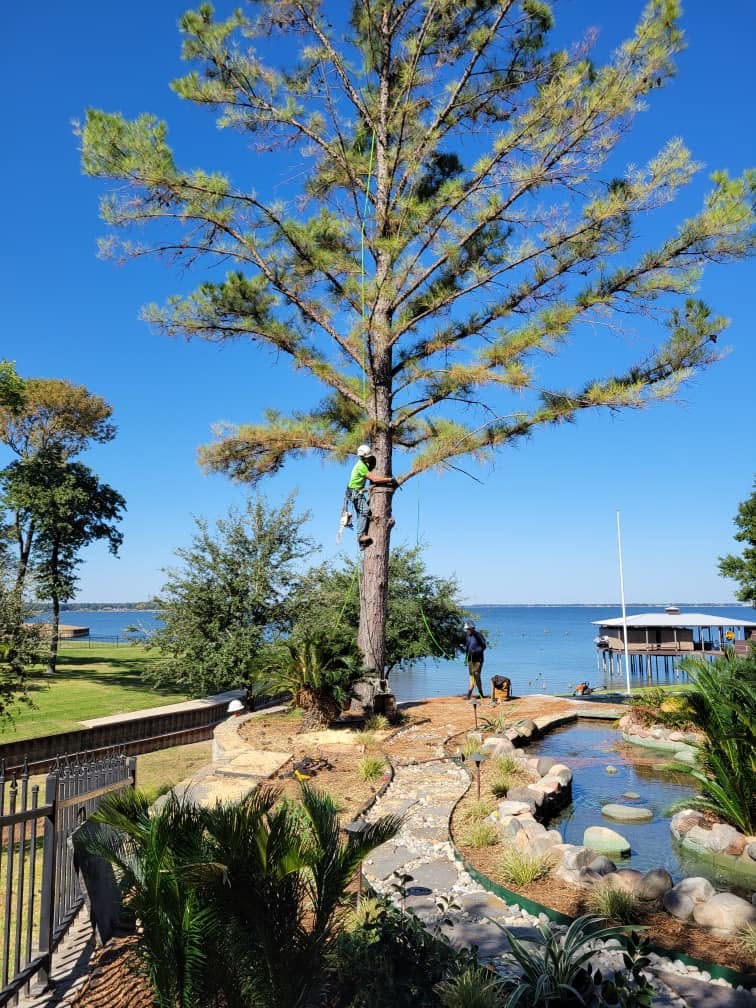
Insect and disease issues rarely exist in isolation from a tree's overall health. A tree already weakened by nutrient deficiency or compacted soil is far more vulnerable to infestation and infection than a well-maintained one, which is why insect and disease management often works best alongside our other Health & Preservation services rather than as a standalone treatment. When our team identifies a pest or disease issue, we also flag any underlying stress factors, such as soil condition or nutrient deficiency, that may be making the tree more susceptible, so the treatment plan addresses root causes and not just the immediate symptom.
Residential and Commercial Pest & Disease Management Across the Region
While much of our insect and disease management work is residential, protecting mature shade trees and established landscaping for homeowners across Corsicana and Streetman, we also serve commercial properties throughout Fairfield, Kerens, Wortham, Teague, Rice, all of Ellis County, and our full 45-mile service radius. Commercial properties with larger tree inventories benefit from routine monitoring that catches emerging issues before they affect multiple trees across the property.
How Tree Insect & Disease Assessments Work
Every insect and disease assessment starts with an in-person visit, where we inspect affected trees and any others nearby that could be at risk. Once we've identified the issue, we walk you through the recommended treatment and timeline, with pricing broken down clearly so you understand exactly what's being treated and why. Payment isn't due until treatment is completed.
Schedule a Tree Insect & Disease Assessment in Corsicana, TX
If you’ve noticed unusual symptoms on a tree, or simply want a proactive assessment before problems start, High N Tight Yards brings certified, diagnostic-first insect and disease management to properties across Corsicana, Streetman, and Ellis County. Call (859) 250-9327 or email support@highntightyards.com to schedule your in-person assessment today.